Lois Castillo is Building Spaces Where Inclusion, Healing, and Legacy Can Coexist
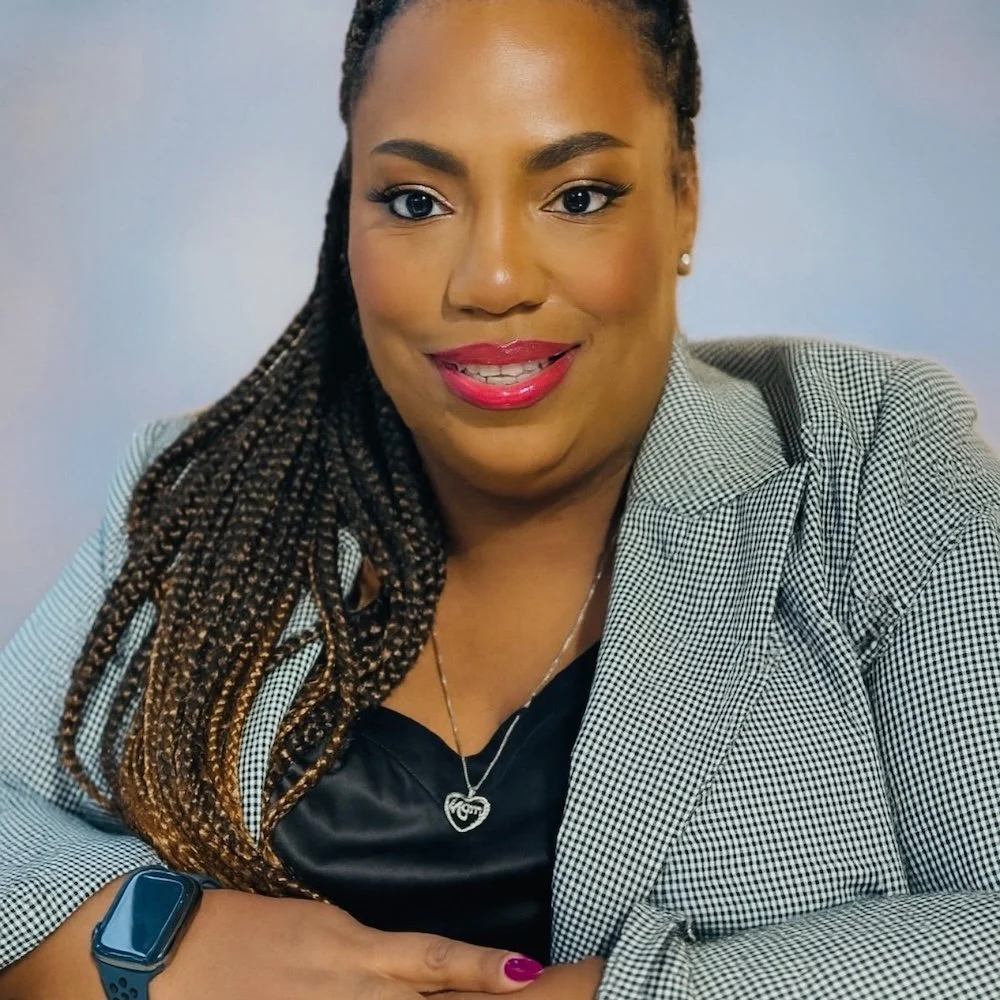
For more than two decades, Lois Castillo has been shaping the way organizations think about culture, leadership, and human connection. Her work sits at the intersection of strategy and humanity—helping companies move beyond surface-level diversity efforts toward meaningful, lasting transformation.
Recognized as one of Crain’s Chicago Notable Leaders in DEI (2023) and honored among the Top Women in Media & Ad Tech as a DEI Champion (2024), Castillo has become a respected voice in conversations about equity, workplace culture, and systemic change. But her influence extends far beyond titles and accolades.
She describes herself first and foremost as a builder—someone committed to creating environments where people are not only included, but genuinely seen, supported, and empowered to grow.
A Career Built on Culture and Change
Castillo’s professional journey spans over twenty years in corporate America, particularly across advertising, media, and technology—industries known for both rapid innovation and persistent structural inequality. Within these spaces, she has led initiatives designed to reshape leadership mindsets and embed inclusion into the fabric of organizational decision-making.
Her leadership today continues at Basis Technologies, where she serves as Head of DEI, while also contributing to broader industry transformation as Chair of the ADCOLOR Board Leaders Advisory Council and as a board member of the Toni Morrison Foundation.
Across these roles, her focus remains consistent: building systems where inclusion is not treated as an initiative, but as a core operating principle.
Identity, Resilience, and the Making of a Leader
Castillo’s perspective on leadership is deeply shaped by lived experience. As a neurodivergent woman with dyslexia, she has navigated environments where she was often underestimated or required to prove her value repeatedly.
She also brings a layered identity to her work—wife, mother, U.S. Army veteran, and coach—each shaping how she understands discipline, service, and resilience.
Rather than allowing obstacles to define limitations, she reframed them as sources of strength. Over time, those experiences became the foundation for her consulting practice, Castle Bell Inc., and her nonprofit initiative, the Castle Bell Hope Project Foundation—both focused on leadership development, organizational change, and community healing.
Why She Chose to Build Her Own Path
After years of working within large organizations, Castillo reached a turning point. She describes a moment when the values she was advocating for no longer aligned with decisions being made at the top. That disconnect became a catalyst.
Instead of stepping away from impact, she chose to redefine it on her own terms.
Castle Bell Inc. emerged from that decision, designed not just as a consulting practice but as a platform for broader transformation. Her vision expanded further with the Hope Project Foundation, which supports at-risk veterans and families through resources that promote long-term stability rather than short-term relief.
For Castillo, business and community are not separate spheres—they are deeply interconnected.
The Principles Behind Sustainable Success
When asked what drives lasting success, Castillo returns to three foundational habits: consistency, accountability, and integrity.
Consistency, she explains, is the discipline of continuing even when momentum fades. Accountability ensures honesty with both self and others, particularly when navigating difficult decisions. Integrity, however, is what sustains everything—it anchors leadership in values rather than short-term outcomes.
Together, these principles form what she considers the real infrastructure of entrepreneurial and organizational success.
Burnout, Healing, and Relearning Self-Care
Castillo speaks candidly about burnout—especially in the context of DEI and advocacy work, where emotional labor is often invisible but intense.
Early in her entrepreneurial journey, she treated self-care as something occasional. That approach eventually collapsed under pressure.
She learned instead to embed well-being into daily life: structured rest, spiritual grounding, presence with family, and permission to move at different speeds depending on the season.
For her, sustainability is not about balance in a perfect sense, but about honesty—recognizing limits and refusing to disconnect well-being from impact.
Writing “Unbreakable” and Defining Legacy
Among her most meaningful accomplishments is her book, Unbreakable: A Changemaker’s Guide. More than a professional milestone, she sees it as a record of lived experience—an offering to others navigating similar challenges in equity, leadership, and organizational change.
Writing it required deep personal reflection, but it also gave her a way to translate years of work into something enduring.
In her view, legacy is not abstract. It is built through shared knowledge, lived truth, and tools that help others continue the work.
Challenges That Shaped Her Perspective
Castillo’s career has also included moments of exclusion and structural bias, particularly in male-dominated environments within advertising and tech. She recalls experiences of being left out of key decisions, only to be assigned high-risk responsibilities without context or support.
Rather than breaking her trajectory, these moments sharpened her resilience. One such account involved being assigned a difficult client after being excluded from a leadership outing—an assignment that ultimately resulted in tripling the account’s value and strengthening long-term business relationships.
For her, such experiences reinforced a central belief: belonging is not required to create impact.
Faith, Leadership, and Staying Grounded
Faith plays a central role in Castillo’s approach to leadership and decision-making. It provides grounding during uncertainty and shapes how she interprets both success and failure.
She describes setbacks not as endpoints but as redirections—opportunities to realign with purpose rather than abandon it.
At the core of her philosophy is a simple conviction: authenticity is not a liability in leadership; it is a source of strength.
Building Inclusive Workplaces for the Future
Castillo argues that meaningful inclusion requires more than intention—it requires structure. She emphasizes three essential components:
- Access to equitable opportunities and leadership pathways
- Advocacy through mentorship and sponsorship
- Accountability through measurable commitments and transparent progress
Without these, she notes, inclusion remains rhetorical rather than real.
A Message That Anchors Her Work
One quote continues to guide her thinking, drawn from Toni Morrison: “You are your best thing.”
For Castillo, it is a reminder that worth is not something to be earned through performance or external validation. It is inherent—and it is the foundation of both leadership and healing.
Closing Perspective
Lois Castillo’s work reflects a consistent throughline: building environments where people can thrive without sacrificing identity, integrity, or well-being. Whether through corporate leadership, consulting, writing, or community initiatives, her focus remains on creating systems that hold both structure and humanity at once.
In her own words, the goal is simple but far-reaching—creating spaces where inclusion, healing, and legacy are not separate ideas, but part of the same foundation.